How to Track and Monitor Competitor Prices: The 2026 Starter Guide

Keeping an eye on competitors is important for every online retailer. Yet, 90% of retailers still don’t have a clear system to track what their competitors are doing. Many businesses rely on manual work — visiting websites, checking flyers, or updating spreadsheets. This takes time, leads to mistakes, and becomes harder to manage as the business grows.
At the same time, AI is changing how online retail works. The global AI-powered retail market is expected to grow from $7.25 billion in 2024 to $64 billion by 2034. According to an NVIDIA survey, 89% of companies already use AI for marketing, customer engagement, or analytics — but many still haven’t applied it to competitor monitoring.
This gap creates a big opportunity. With automation and AI, retailers can:
- Automatically track competitor prices, stock, and promotions in real time
- Identify pricing trends and unusual promotions
- Get actionable insights to make smarter pricing decisions
Instead of guessing, retailers or Shopify store owners can rely on structured data to react faster to market changes and confidently grow profits.
What Are Competitor Tracking and Competitor Monitoring?
Competitor tracking and competitor monitoring involve systematically observing competitor prices, stock availability, promotions, and market behavior over time. These insights help you answer critical questions:
- How often do competitors change prices?
- Which competitor consistently offers the lowest price?
- When are promotions or sales run?
- Are key products frequently out of stock?
Tracking can be manual for small catalogs but automated for larger catalogs or marketplaces, providing continuous, accurate data that can scale with your business.
1. Gathering the Right Data
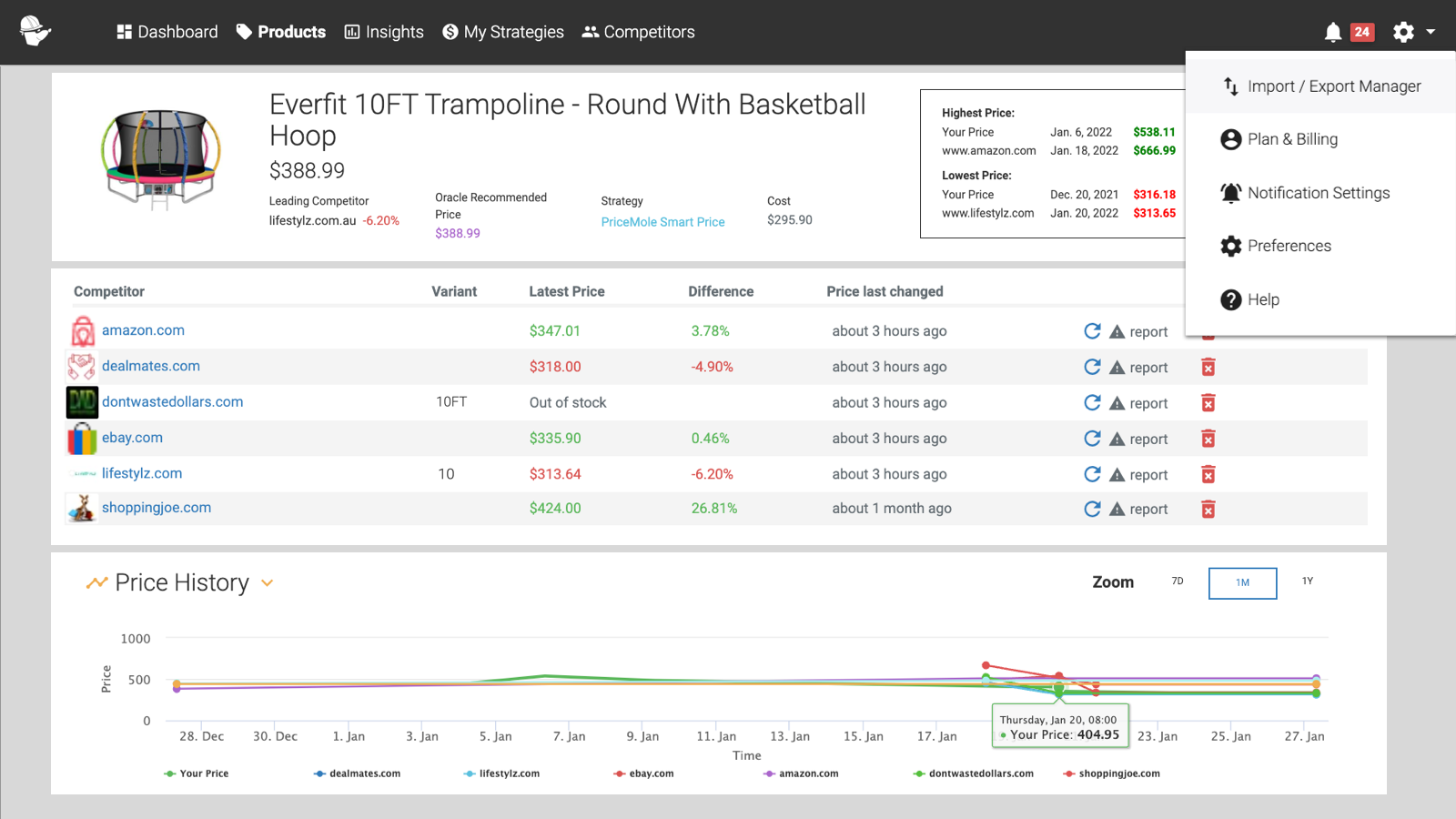
Effective monitoring requires tracking multiple types of information:
- Pricing data: Current and historical prices
- Stock availability: In-stock vs. out-of-stock status
- Promotions: Discounts, bundles, seasonal offers
- Historical trends: Patterns over months or years to forecast demand
Example: Laptop Retailer

Even if your price seems competitive at first glance, considering shipping and promotions may reveal that a competitor is cheaper. Proper tracking helps you make data-driven adjustments, like adding a small e-gift card or adjusting price endings.
2. Time, Manual Effort, and Automation
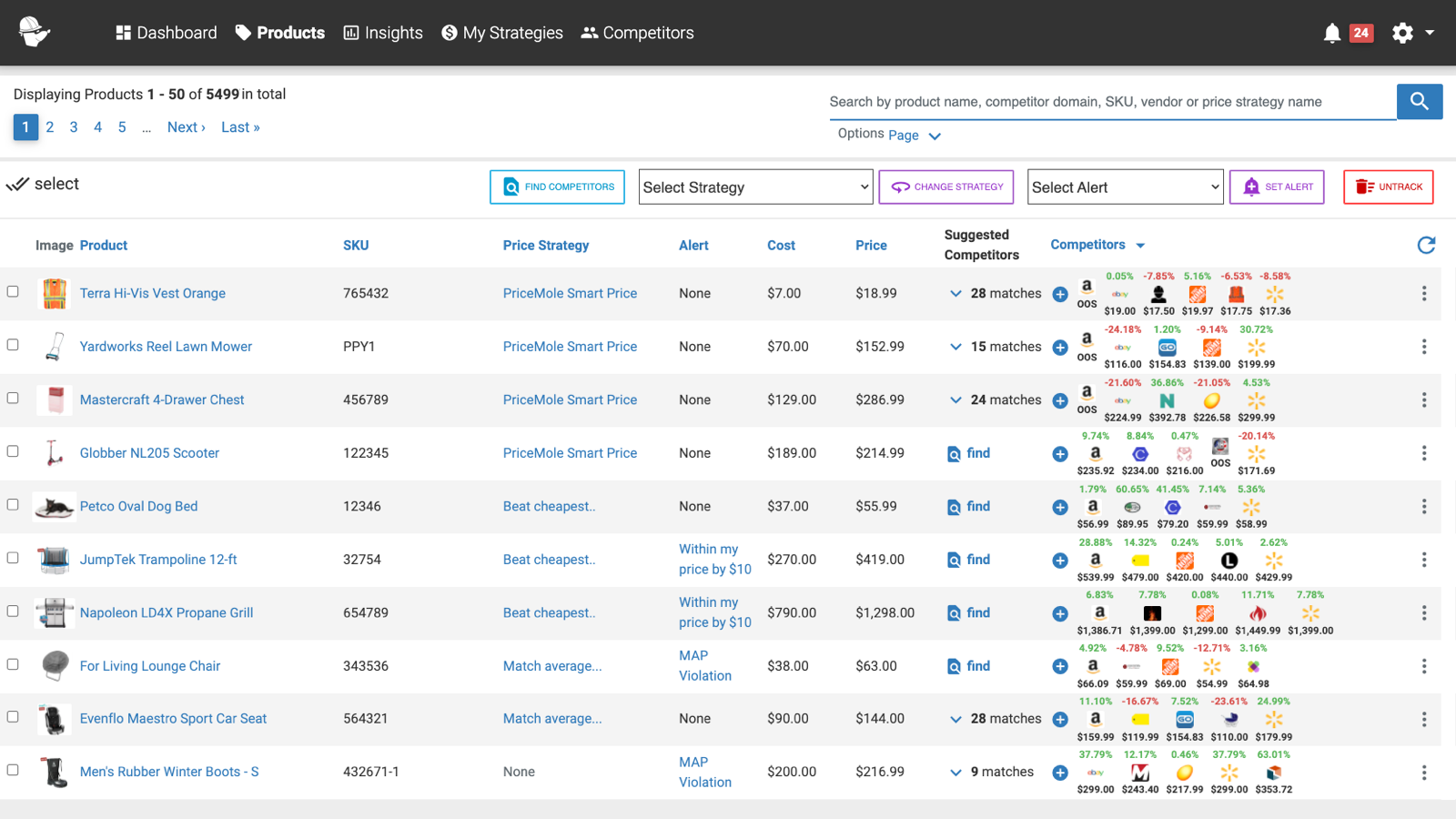
Manual Tracking Challenges
Manual competitor monitoring is time-consuming and error-prone.
Example: A Shopify sneaker store has 5,000 products and monitors 10 competitors. If each check takes 1 minute:
5,000 products × 10 competitors × 1 min = 833 hours
≈ 34 full 8-hour workdays
This is just for one complete check! Manual tracking cannot keep up with fast-moving markets.
Tip: PriceMole Discovery Service is designed to help partners track key competitors — typically the top 5, top 10, or top 20 — providing more targeted and actionable insights without drowning in data gathering.
Automation Benefits
- Run standard updates at least 4 times a day, including weekends and holidays
- Capture prices, stock, and promotions multiple times per day
- Free team members to focus on analysis and strategy
- Integrate AI for predictive pricing and dynamic adjustments
Case Study: ScopeUout (2026 Estimate)

Store: ScopeUout (New Zealand & Australia)
Industry: Sports optics (binoculars, spotting scopes, riflescopes)
Challenge: Managing over 1,000 SKUs across multiple product categories made it difficult for ScopeUout to track competitors, maintain competitive pricing, and identify profit opportunities manually. Without automation, the team faced time-consuming price checks and the risk of lost sales or reduced margins.
Implementation Timeline
- 2021: ScopeUout implemented PriceMole’s automated competitor monitoring and dynamic pricing strategies to streamline pricing across its catalog.
- 2026: After 5 years of continuous optimization, the system became central to their pricing strategy, enabling more proactive and data-driven decisions.
Estimated Results (2026)
- ~2,080 hours saved from automated competitor tracking, allowing the team to focus on strategic initiatives like marketing campaigns, supplier negotiations, and new product launches.
- ~15% cumulative profit increase over five years, demonstrating the long-term impact of data-driven pricing.
- Improved decision-making speed and accuracy, reducing pricing errors and ensuring competitiveness across markets in New Zealand and Australia. ,
Additional Business Impact
- Enhanced customer confidence: By staying competitive on key products, ScopeUout maintained high conversion rates and repeat purchases.
- Operational efficiency: Automation reduced manual effort and enabled scalable growth without proportional increases in staff.
- Strategic focus: Freed internal resources allowed the team to pursue new growth opportunities, such as expanding product lines and entering new markets.
Key Takeaways
ScopeUout illustrates how a structured, long-term pricing and monitoring approach can:
- Efficiently manage large and complex product catalogs
- Drive consistent profitability growth
- Increase operational efficiency
- Strengthen competitive positioning
3. Fast Response to Market Changes

Retail markets are highly dynamic. Prices can change multiple times per day, especially on marketplaces like Amazon.com.
- 65–72% of online buyers in 2026 re reported to compare prices across multiple sites or platforms before completing a purchase.
- 44% specifically compare prices across at least three different retailers before buying.
Automation Example: A competitor monitoring tool detects a flash sale on a top-selling gadget and adjusts your prices instantly according to your pre-set rules — for example, match the lowest price while maintaining a minimum profit margin.
4. Strategic Insights from Trend Data
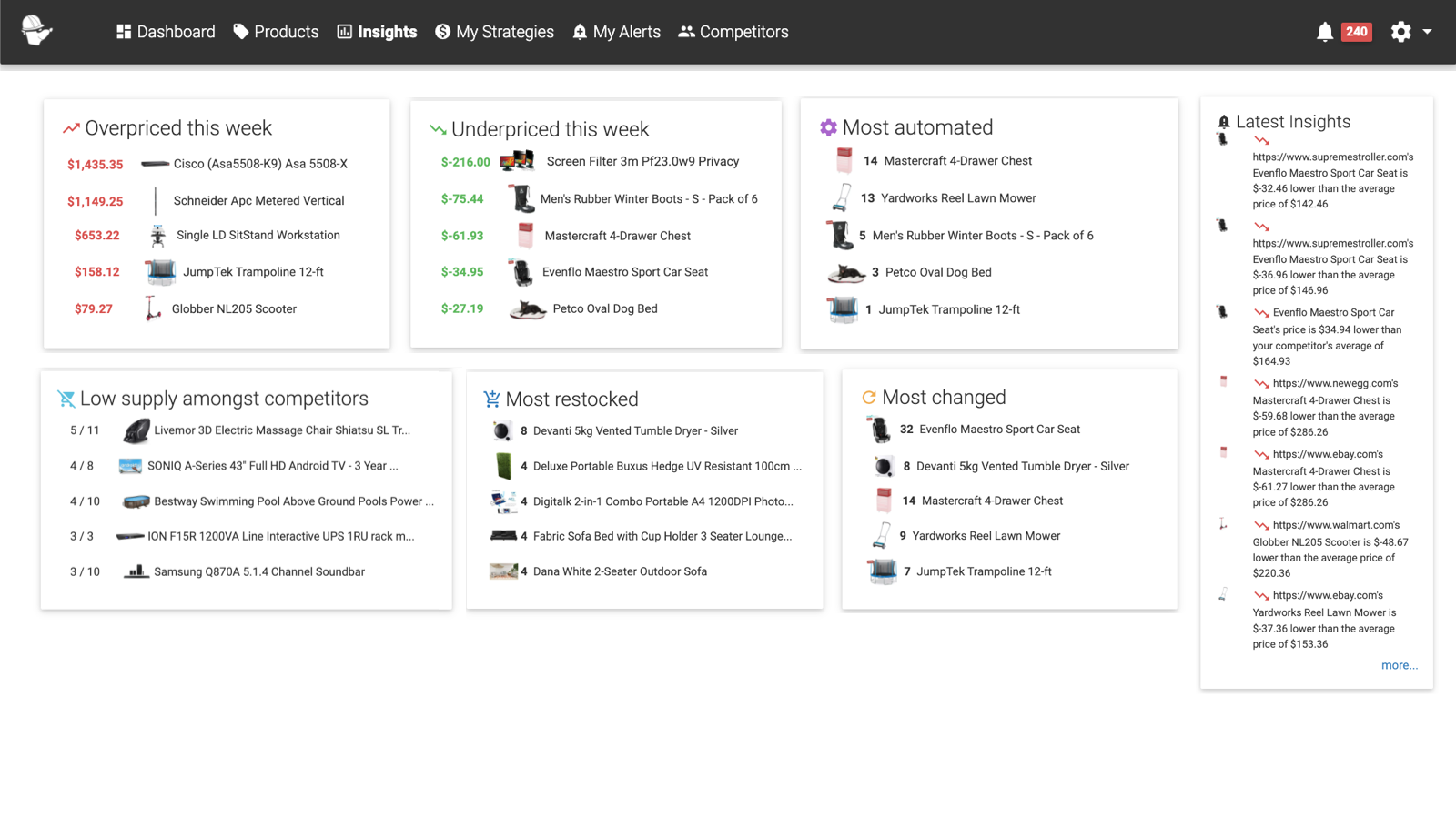
Long-term competitor tracking helps uncover patterns that guide strategic decisions:
- Seasonal promotions: Plan discounts ahead of competitor cycles
- Stock trends: Forecast out-of-stock periods to maximize sales
- Price sensitivity: Understand customer response to price changes
Example: Seasonal Outerwear Strategy
A retailer notices competitors discount jackets 15–25% starting November 20 each year. Using this insight, they:
- Launch promotions a day earlier to capture early buyers
- Adjust inventory to stock high-demand jackets
- Time marketing campaigns with peak customer search behavior
Result: Higher sales and first-mover advantage without overspending on inventory.
How Competitor Tracking Works
Step 1: Identify Competitors
- Direct: Same product and target audience
- Indirect: Products fulfilling the same need
- Marketplace: Third-party sellers on platforms like Amazon or eBay
Step 2: Collect Data Automatically
Automated systems gather:
- Prices
- Stock levels
- Promotions and discounts
- Frequency of price changes
Step 3: Analyze the Data
Use dashboards and trend analysis to answer:
- Who consistently offers the lowest price?
- When do promotions occur?
- Are products often out-of-stock?
Step 4: Apply Insights
Implement rules for automated pricing:
- Match or beat the lowest competitor price
- Adjust based on stock or seasonal trends
- Increase prices when competitors are out of stock
- Automate promotions during competitive periods
Example: Smart Pricing Strategy for Smartphones
- Match the lowest competitor price within a $5 margin
- Increase prices by 3% when competitors are out-of-stock
- Offer automatic bundle deals during holiday seasons
Result: Maintains competitiveness, maximizes sales opportunities, and protects profit margins.
FAQ
Q: How often should I monitor competitor prices?
A: Daily for fast-moving products; automated monitoring can be 4 times a day, every 6 hours.
Q: Can small retailers benefit from competitor tracking?
A: Yes — even Shopify stores benefit from tracking top competitors and trends.
Q: Does AI improve competitor monitoring?
A: Yes — AI can predict competitor behavior, optimize margins, and automate dynamic pricing.
Q: What data should I track besides price?
A: Stock levels, promotions, and historical trends provide a complete view.
Summary
Competitor tracking and monitoring are essential for modern online retail. They help retailers:
- Save time compared to manual tracking
- Respond quickly to market changes
- Gain actionable insights from historical trends
- Make smarter pricing decisions backed by data
Automation and AI are key to scaling these practices. Ecommerce businesses that adopt structured competitor intelligence gain an advantage in responsiveness, profitability, and strategic planning.
Want to stay ahead in e-commerce?

PriceMole uses AI to track competitor prices and trends, helping you stay competitive and profitable. With easy-to-use insights and automation, smart pricing has never been easier!
Contact us now on our Website, Shopify, BigCommerce, Facebook, Twitter, and LinkedIn and take control across your market!