What Is the Best Pricing Tool for Shopify in 2026?

When Pricing Stops Being Simple
Most Shopify merchants start the same way. You set your product prices, launch your store, and assume that's mostly it. But as the store grows, something changes. A competitor drops their price overnight. Another runs a flash sale. Suddenly, your product is no longer competitive, and you do not notice until sales slow down.

This becomes even more important as the e-commerce landscape continues to scale rapidly. Global eCommerce sales are projected to reach approximately $6.42 trillion to $6.88 trillion this year, accounting for over 21% of total retail sales, with more than 2.7 billion online shoppers worldwide. Growth is driven by mobile commerce, which now represents nearly 59% of total sales, along with increasing adoption of AI-powered personalization and automated shopping experiences.
In an environment like this, pricing is no longer a one-time setup. It becomes a continuously changing factor in competitiveness.
That is usually the moment merchants realize:
Pricing is not a one-time decision anymore.
It is something that changes constantly.
And manually keeping up with it quickly becomes difficult
The Problem Shopify Stores Do Not Notice Early
At first, checking competitor prices manually does not feel like a big task. You open a few tabs, maybe check once a day. It feels manageable.
But as your catalog grows:
- 20 products become 200
- 200 becomes 2,000
- Competitors multiply across regions and platforms
What used to take minutes becomes hours every week.
And worse—by the time you notice a price change, the impact has already happened.
Lost conversions. Reduced margins. Slower sales.
That is when most teams start looking for pricing tools.
The Three Ways Pricing Tools Actually Work
Once Shopify merchants start exploring solutions, they usually realize something important:
It is not just about different tools—it is about different ways of handling pricing decisions.
Most tools fall into three approaches.
1. Monitoring-First Approach
Some pricing tools are built for market visibility and monitoring capabilities.

An example of this approach is Price2Spy, which is widely used for:
- Monitoring websites that require actions to view prices, such as adding items to the cart or logging in
- MAP (Minimum Advertised Price) monitoring with alerts and screenshot proof of violations
- Supporting dynamic pricing rules with options for manual approval or automation
This approach is designed for teams that need coverage and control over pricing intelligence, especially in large-scale environments.
The focus remains heavily on detection and analysis. Execution is typically managed separately by the team.
Simple example:
You sell a product for $50.
Price2Spy detects that a competitor is showing $47 after logging in or navigating deeper into their website.
You receive an alert, then decide manually what action to take.
2. Rule-Based Pricing Approach
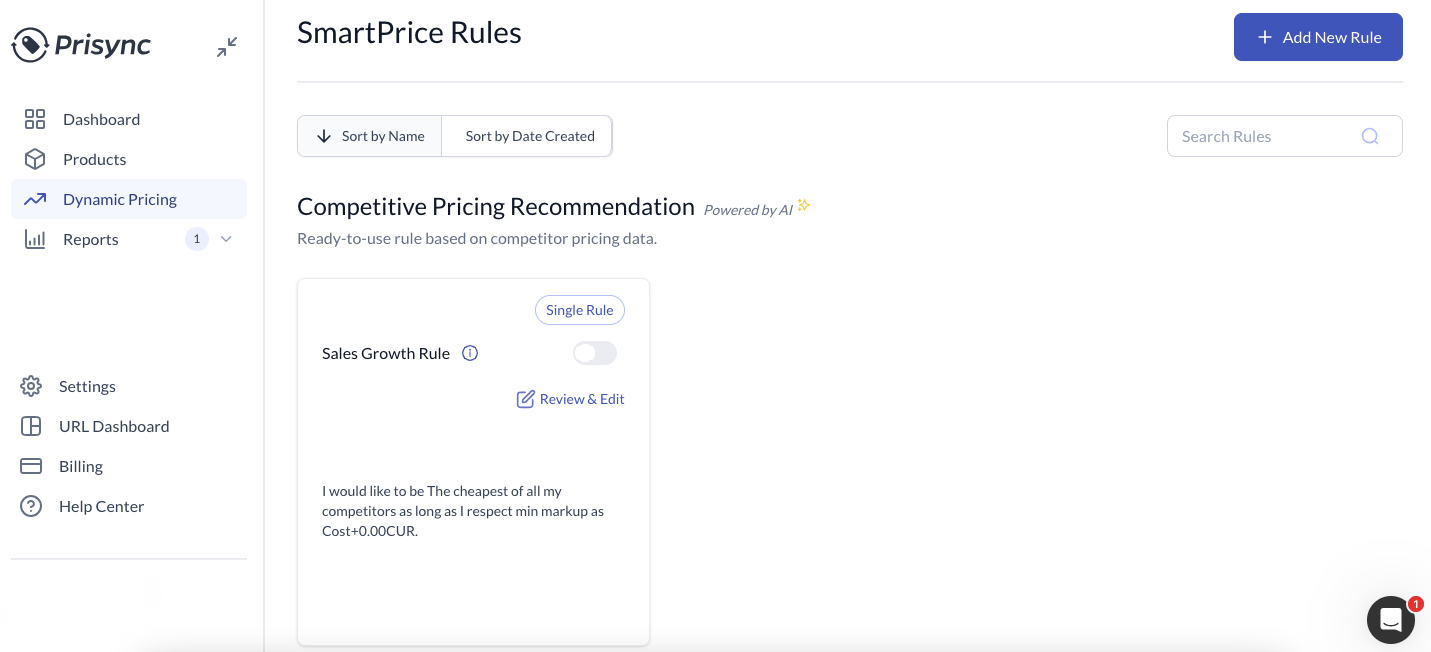
Another common approach is structured rule-based pricing, where platforms like Prisync focus on turning competitor data into automated pricing logic.
Based on publicly available positioning, Prisync is commonly used for:
- Tracking competitor prices
- Setting automated pricing rules based on competitor movements
- Supporting dynamic pricing strategies with rule-based adjustments
This approach helps businesses standardize pricing decisions and reduce manual updates.
It relies on clearly defined rules, which need to be maintained and adjusted as market behavior changes.
Simple example:
You set a rule: "Always stay 2% below the lowest competitor price."
If a competitor lowers their price from $50 to $48, your price automatically adjusts to around $47.04.
If competitors change strategy, such as bundling products or shifting promotions, the rule may need to be updated.
3. Execution-Focused Pricing Approach
This approach focuses less on managing complex monitoring systems or rule layers and more on simplifying how pricing is executed on a day-to-day basis.
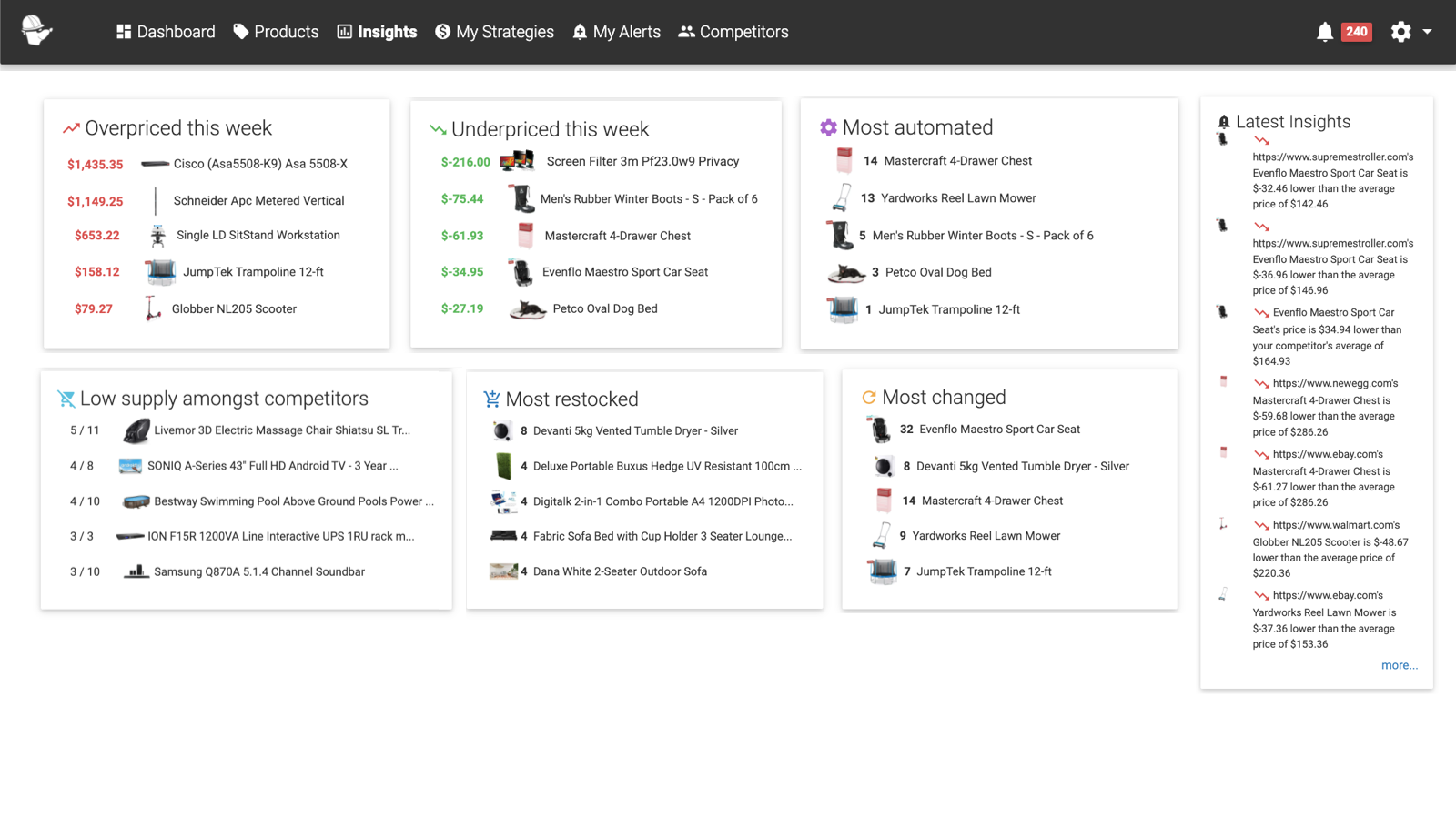
PriceMole is designed as an all-in-one pricing workflow for Shopify and Shopify Plus, combining competitor monitoring, rule-based strategy, MAP tracking, and execution insights in one system.
Instead of separating pricing into multiple tools or requiring constant rule maintenance, the focus is on bringing everything into a single operational flow.
The system is designed to:
- Continuously monitor competitor pricing
- Apply pricing strategies automatically within defined business boundaries
- Provide insights and adjustments without requiring frequent manual updates
This reduces the need to switch between tools or constantly maintain rule structures while keeping pricing aligned with business strategy.
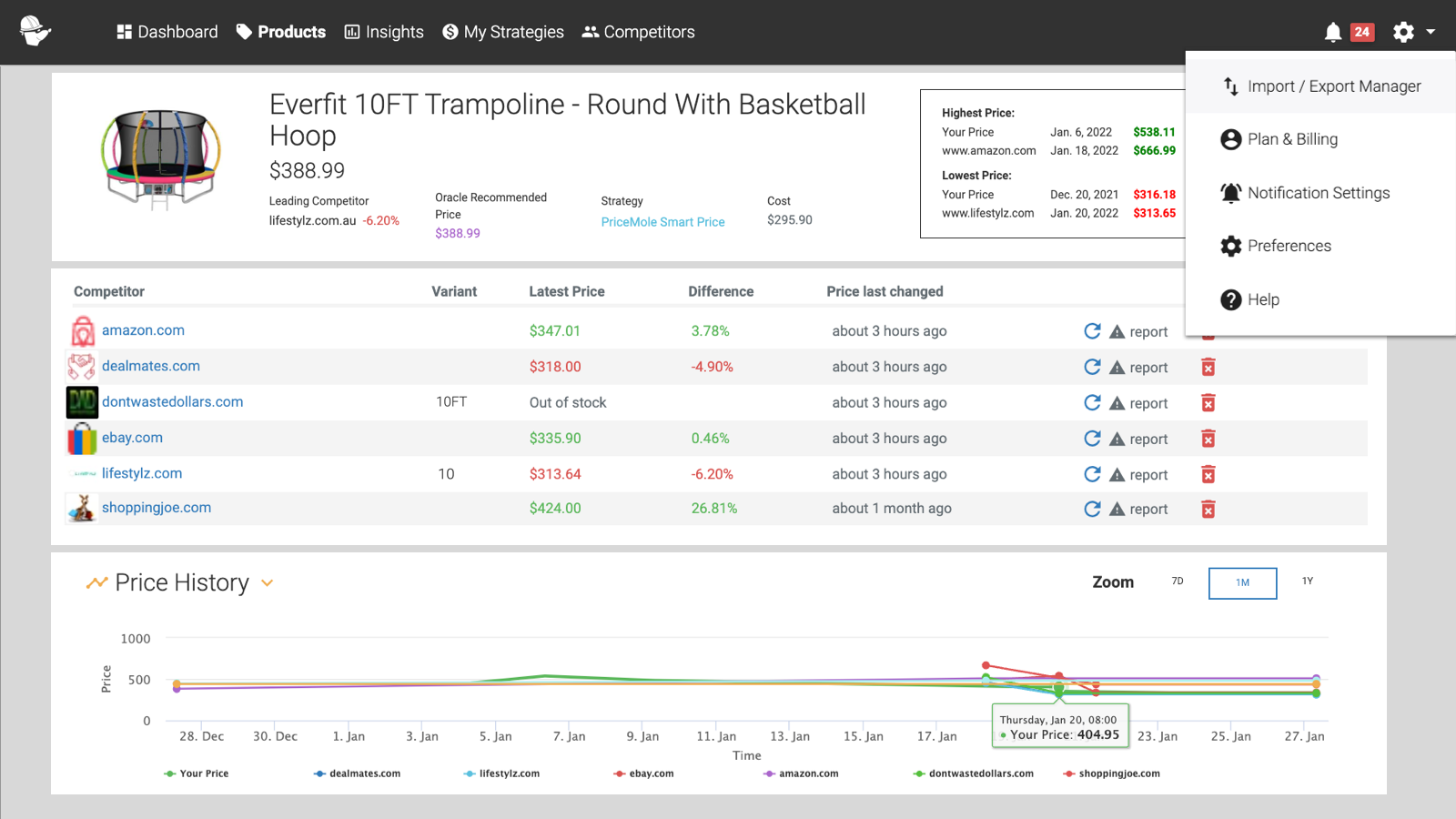
Over time, this type of workflow helps teams stay closely aligned with market changes, respond more consistently to competitor movements, and maintain pricing that supports both competitiveness and sustainable growth—without adding extra operational overhead.
Simple example:
You set a simple strategy:
- Stay competitive
- Maintain a minimum margin of $45
PriceMole continuously monitors competitors and adjusts pricing automatically within your defined boundaries.
You do not need to build multiple rules or manually react to every change unless something unusual happens in the market.
What This Looks Like in Practice
Imagine you sell a product for $50.
Your strategy is simple:
- Stay competitive
- Never go below $45
Now, a competitor changes their price.
In a monitoring-first setup like Price2Spy:
- You notice the change
- You analyze the impact
- You decide what to do
In a rule-based setup like Prisync:
- A rule triggers
- Price adjusts based on the conditions you configured
In an all-in-one app setup like PriceMole:
- The tool already understands your pricing boundaries
- It adjusts pricing automatically within your strategy
- You only intervene when something unusual happens
The difference is not just automation. It is how much ongoing effort is required to maintain pricing stability.
Pros and Limitations of Each Approach
Each pricing approach solves a different problem. The right choice depends on how your team prefers to manage pricing day to day.
Monitoring-First Approach
Pros:
- Strong visibility into competitor pricing, even on complex or restricted websites
- Advanced tracking capabilities, including MAP monitoring
- High level of customization for analysis
Limitations:
- Requires manual decision-making after data is collected
- Execution is handled outside the system
- Becomes time-consuming as product catalogs grow
Rule-Based Pricing Approach
Pros:
- Automates pricing decisions based on predefined rules
- Provides consistent pricing logic across products
- Easier to scale compared to manual processes
Limitations:
- Rules require ongoing review and adjustment
- Pricing logic can become complex over time
- May not adapt quickly to unexpected market changes
Execution-Focused Pricing Approach
Pros:
- Combines monitoring, strategy, and execution in one workflow
- Reduces the need for constant manual updates or rule maintenance
- Keeps pricing aligned with business strategy with less operational effort
Limitations:
- Less reliance on granular rule-by-rule customization
- Requires a clear initial strategy setup
Which Option Is Better?
At this point, the better question is not which tool is best overall—but which approach fits how your team works.
- If your priority is deep analysis and full control, monitoring-first tools like Price2Spy are a strong fit
- If your priority is structured automation with predictable logic, rule-based tools like Prisync work well
- If your priority is reducing manual effort and keeping pricing consistent within Shopify workflows, execution-focused tools like PriceMole tend to align more closely
A practical way to decide is to look at where your team spends the most time today:
- Reviewing pricing data → monitoring-first
- Managing rules → rule-based
- Constantly adjusting prices → execution-focused
Many Shopify teams move from monitoring to rules, and eventually toward simplifying execution as they scale.
The shift happens because the real challenge is not access to data—it is the time required to manage pricing consistently.
Where These Tools Fit in Real Shopify Workflows
Each approach serves a different operational need.
Price2Spy is often used for detailed competitor tracking and historical analysis. It fits teams where visibility and data depth are priorities.
Prisync is commonly used for structured competitor monitoring and rule-based pricing automation.
PriceMole is designed around Shopify workflows, focusing on reducing manual pricing effort and helping teams maintain consistent pricing execution without constant rule management.
The difference is not just features, but how pricing is handled inside a team daily.
Pricing Tools Overview
| Tool | Positioning | Core Features | Best For | Starting Price |
|---|---|---|---|---|
| PriceMole | All-in-one pricing execution platform | Real-time Competitor monitoring, automated pricing rules, Dynamic pricing, MAP tracking, competitor widget, and advanced insights in one system | Shopify and Shopify Plus stores that want simplified pricing operations and less manual work | FREE 14-day trial |
| Prisync | Rule-based dynamic pricing automation tool | Competitor tracking, automated pricing rules, price positioning, and dynamic repricing logic | eCommerce stores needing structured pricing automation with rule control | Starts at $49/ month |
| Price2Spy | Competitor price monitoring and intelligence platform | Price tracking (including login/cart-required pages), MAP monitoring, historical data, reporting | Large catalogs and teams needing deep competitive intelligence and monitoring depth | Basic 2K starts at $157.95/ month |
The Hidden Shift in Shopify Pricing
Most Shopify teams do not struggle with access to pricing data.
They already know:
- What competitors are doing
- How prices are changing
- What their margins should be
The real challenge is execution.
Keeping pricing aligned with strategy without increasing operational workload.
That is why pricing tools are increasingly judged not just by what they show—but by how much effort they remove from day-to-day operations.
So What Is the Best Pricing Tool for Shopify in 2026?
There is no single best pricing tool for every Shopify store.
The right choice depends on how pricing is managed within the business.
- If the focus is deep analysis and full control, Price2Spy-style tools are well-suited
- If the focus is structured rules and predictable logic, Prisync-style tools are a strong fit
- If the focus is on reducing manual effort and maintaining pricing consistency within Shopify workflows, PriceMole-style execution-focused tools tend to align more closely
For many Shopify and Shopify Plus teams in 2026, the shift is not about collecting more data—it is about reducing the effort required to act on it consistently.
Final Thought
Pricing used to be something you set.
Now it is something you manage continuously.
And increasingly, it is something you design once and allow systems to help maintain over time.

If you want to explore how this approach can support your pricing strategy across your market and channels, you can reach out to us anytime.
Contact us on our Website, Shopify, BigCommerce, Facebook, Twitter, and LinkedIn, and take control of your pricing across your store.